Project Overview
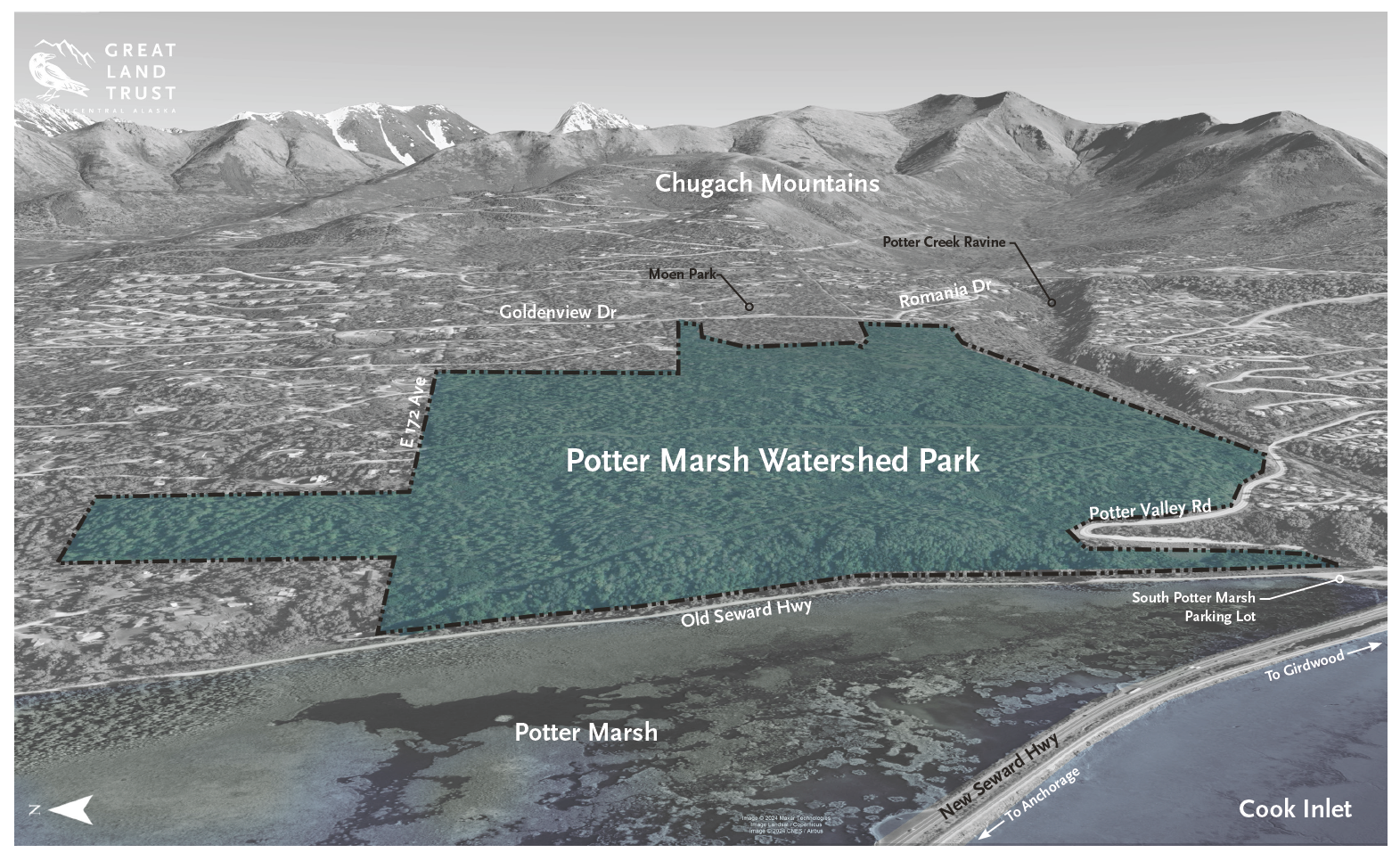
In 2024, Potter Marsh Watershed Park was established through a partnership between Great Land Trust and the Anchorage Parks and Recreation Department. The 300-acre park sits just above Potter Marsh and borders Chugach State Park, creating a large stretch of protected forest and wetland habitat, while offering low-impact recreational opportunities.
Great Land Trust holds the Potter Marsh Watershed Park Conservation Easement, which places a permanent restriction on future improvements and activities within the park. These protections ensure that its natural habitat, open space, and opportunities for recreation and education are preserved.
Starting in the fall of 2025, Great Land Trust and Anchorage Parks and Recreation are developing the Potter Marsh Watershed Park Master Plan. This plan will guide park improvements over time, focusing on recreation that supports its conservation goals.
Learn About Great Land Trust
Frequently Asked Questions
Is this Park Open?
Yes! Potter Marsh Watershed Park is open to the public, but you may notice there aren't any amenities.That is why we are working on the Master Plan, which is a way to gather input from the community to get an idea of what improvements would be useful and where they should go.
What is a Conservation Easement?
A Conservation Easement is a legal agreement between a landowner (Parks and Recreation) and a qualified organization (Great Land Trust) that permanently restricts certain types of development or land use in order to protect the land’s natural resources.
Read the Conservation Easement
What Kind of Improvements Can Occur?
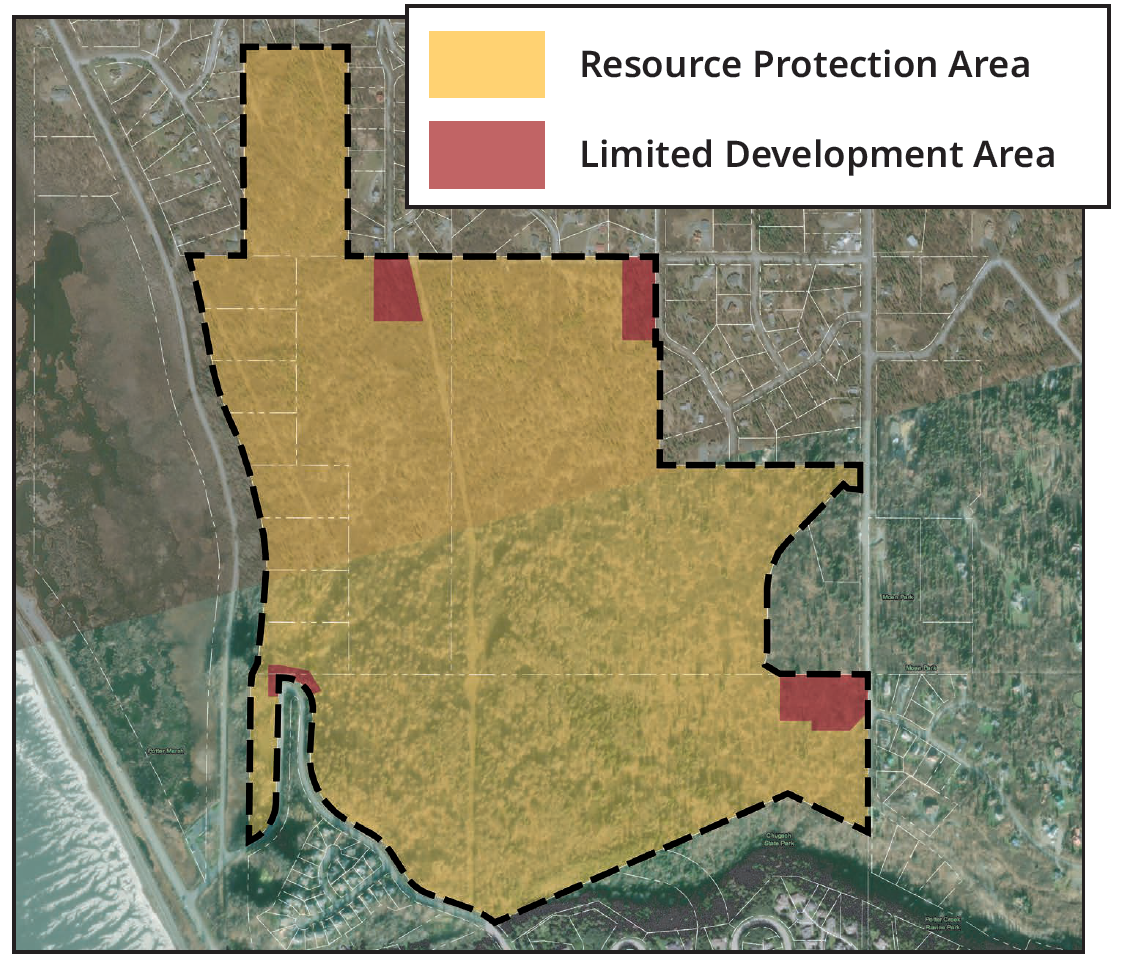 The only improvements allowed are those that support low-impact trail use and enable access within the site while minimizing impacts to the site's natural values. Defined uses are permitted, provided they do not adversely affect park improvements or conservation values.
The park is divided into two types of areas—the Resource Protection Area and Limited Development Areas. The Conservation Easement outlines what improvements and activities can occur in each area.
Here is a brief summary of each area:
Resource Protection Area:
The majority of the park is part of the resource protection area. Improvements are limited to:
- Maintaining existing features such as the Gasline, Belarde, and Moen Homestead Trails for non-motorized uses.
- New amenities like educational or regulatory signs, benches, trash receptacles, habitat features (such as bird houses), access-control structures (like gates), and low density soft-surface trails that do not alter the natural grade (i.e., no embankments, dirt jumps, ramps, or Improvements that are not required for accessibility or Conservation Purposes).
Limited Development Areas:
There are four Limited Development Areas where additional improvements may occur. Improvements include:
- All improvements listed under the Resource Protection Area
- New amenities that support Passive Recreation, including paved parking lots, access drives, landscaping, restrooms, kiosks, picnic tables, pavilions, paved non-motorized trails of any width, utility upgrades, and outdoor lighting designed to minimize light pollution.
The information provided above is a summary and should not be considered a legal interpretation or used in place of the recorded Conservation Easement.
What Activities are Permitted in the Park?
Activities within the park are limited to those permitted by the Conservation Easement, focusing on low-impact, non-motorized recreation and open space activities that have minimal disturbance/impact on the natural environment. These activities may include, walking, biking or horseback riding on trails, cross country skiing, bird watching, nature study or appreciation, berry picking, or educational or scientific activities consistent with the furtherance of the Conservation Purposes.
How Can I Get Involved?
Join the Mailing List
Stay up to date on Potter Marsh Watershed Park! Join the mailing list for announcements, project updates, and key milestones throughout the master plan process.
Comment Collector
The Potter Marsh Watershed Park Master Plan Process is drawing to a close. If you wish to provide guidance to be considered for final refinements to the plan (outside of the public testimony opportunities listed under upcoming meetings), please submit your comment(s) below.
Feedback provided via this comment collector will not be made public.
Upcoming Meetings
Planning and Zoning Commission
This is an expected date. Please check the commission schedule closer to the date to ensure that the meeting will occur and that the Potter Marsh Watershed Park Master Plan is on the agenda.
- When: Monday, August 10, 6:30 PM
- Where: Assembly Chambers, Z.J. Loussac Library (3600 Denali St.)
Funding
This Master Plan public process is being paid for by Great Land Trust, and is being completed by Corvus Design, Inc. in partnership with the Anchorage Parks and Recreation staff and Great Land Trust.
Resources
Follow the Blog
Read meeting notes, find additional materials, and learn more on the project blog!
Download Materials