It's hard to believe that it was fifty years ago that the Greater Anchorage Area Borough and City of Anchorage unified into the Municipality of Anchorage. As members of the 1975 Charter Commission, the story about how this merger happened and what we saw as critical elements is the basis for this article.
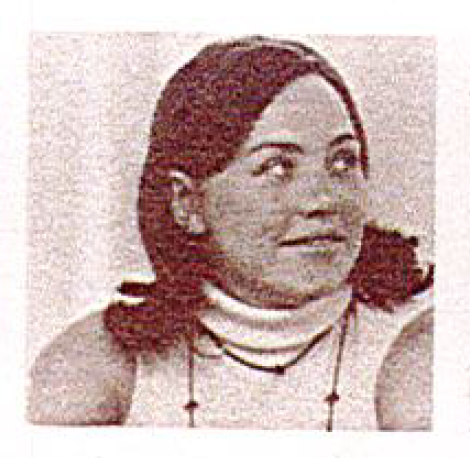 Jane Angvik
Jane Angvik has been involved in Alaska public life since 1973. After serving on the Anchorage Charter Commission, she was elected to the Anchorage Assembly and became the first woman to serve as Assembly Chair. She has managed state agencies, coordinated a foundation, planned and built facilities and assisted communities across Alaska in planning their infrastructure and long-range economic strategies. Jane has also taught many women how to conduct campaigns for public office.
 Joe Josephson
Joe Josephson first came to Alaska in 1958, as an aide to
Territorial Delegate Bob Bartlett. Previous to that, Joe was an
attorney-at-law and 2nd Lieutenant in the Army. Joe first ran
for public office in Alaska in 1962, and was elected to the Alaska House where
he served four years. In 1968, he was elected to the State Senate,
serving one term. He was elected to the Anchorage Charter Commission in
1975 and served on the Anchorage Assembly beginning in 1980. He returned
to the State Senate from 1982-1988. Thereafter, Joe was in the private
practice of law in Anchorage, but continued to serve on local boards and
commissions. Joe very recently moved to Bethesda, Maryland, retiring at
age 91.
 Lisa Parker
Lisa Parker is a fourth generation Alaskan with over 50 years of public service. She won her first election in 1975, at the age of 19, to the Anchorage Charter Commission. She is Vice Mayor for the City of Soldotna, has served for 14 years on the Soldotna City Council and is the current President of 165 member Alaska Municipal League.
Change was the primary driver for the new government structure. The boundaries of the former City, incorporated in 1920, stopped in the south at Northern Lights and to the east atMuldoon Road. Most of the area outside those borders fell under the Borough government, which was established in 1964. As the population rapidly grew, as individual wells and septic tanks gave way to water and sewer systems and trails gave way to paved roads, disagreements over who paid for which improvements emerged. City residents who had been investing in infrastructure for decades did not want to pay again for the new outlying neighborhoods. The more rural areas didn't want to be like a city. They sought large open lots and the right to build whatever they wanted on their land. Conflicts were inevitable as the prospect of the Trans Alaska Pipeline jobs brought a boom of new population from the lower 48. These issues were addressed by writing a new Municipal Charter.
An election for Charter Commission Members was conducted in 1975. Of the eleven people who were elected to serve on the Anchorage Charter Commission only three remain: Lisa Parker, Jane Angvik and Joe Josephson.
A charter is like a constitution for local governments and, like the U.S Constitution, the Anchorage Home Rule Charter has a Bill of Rights. This Bill of Rights was not in the first draft charter issued for public comment in May of 1975 but was added later. The Commission members decided a Bill of Rights would make it easier for people to understand the structure of the unified government and would clearly articulate their rights as residents. It is this Bill of Rights that sets the stage for people to get a glimpse of the structure of the Anchorage Charter without reading the entire document.
Read the Question & Answers pamphlet produced and distributed by the Charter Commission in 1975.
There were several issues that we knew could create controversy and provide for engaged discussion. One was if Anchorage should be led by a strong mayor or a weak mayor/council-manager form of government. In the end a compromise of the two was included in the Charter – a strong mayor who is required to appoint a professional manager. This was a blend of how the City of Anchorage had operated, with the weak mayor/council manager form of government, and how the borough was led, with the strong mayor.
Another issue where we had to compromise was on how the legislative (i.e., assembly) districts would be established. Some advocated for elections at large, others wanted to have eleven single member legislative districts. Working in the best interests of the population, a hybrid was created from the existing two local governments. While it wasn't easy, members of the Charter Commission wanted to create a charter that was in the best interests of the collective area.
Two areas that created animosity in past attempts at unifications dealt with the city utilities and service areas. Residents of the City did not want to share the profit from the utilities with the borough residents. And borough residents did not want to assume the cost for services that they had not previously voted for. Borough voters only wanted to pay for what services they wanted, and City voters wanted to keep their utilities. The Charter was successful in putting in place a process for the creation, alteration, and abolishment of service areas along with having each utility stand alone with profits from the utilities returned to the new service area, former City of Anchorage boundaries, for a period of five years. There were no new service areas established, and this could only be done if explicitly approved by the voters in the area.
Sales tax was an especially contentious topic. In the end, instead of putting a sales tax in place, the Charter Commission responded to a significant amount of public testimony against a sales tax and decided that no sales tax would be valid unless ratified by the majority of the voters. Since the charter was adopted, the voters have changed this provision numerous times to make it more difficult to put a sales tax in place.
History Takes: Lisa Parker
Lisa Parker, who served on the 1975 Charter Commission, recently reflected on the choice to require voter approval for a sales tax:
“Being young and ideological, I felt it was important for voters to have the opportunity to decide on what should be taxed. As I reflect back, I realize I was wrong and should have left this decision up to the Assembly,."
Given the public emphasis on sales tax issues at the time, the inclusion of the provision in the proposed charter may well have been a deciding issue for those who voted in favor of the Charter.
During public meetings, residents repeatedly commented on the need to know what the government was doing and to have a voice in addition to their elected officials. Particularly in the borough, people thought the local government acted without transparency. Through the establishment of Community Councils in the Charter, neighborhoods could establish citizen councils that promoted community involvement and self-determination. These community councils have grown and transformed over the fifty years hopefully proven helpful to the Mayors and Assembly as they deal with complex issues.
In February 1975, voters were asked if they wanted to have a charter commission empowered to write a charter that would unify the City and Borough into one government. At the same time voters voted on who would serve on the Charter Commission. Thirty-four people ran for eleven seats on the commission– thirteen for the three at large seats; eleven for the four seats representing the City of Anchorage; ten for the four seats representing the Greater Anchorage Area Borough.
In placing the new government Charter before the voters months later, the Charter Commission decided to ask the voters to decide if they wanted the new charter, as well as who should manage the new government, if it was approved. Thus, they also voted on who they would want to see as the Mayor of the Municipality of Anchorage and who should serve on the Assembly and the School Board. Like those elected to serve on the Charter Commission in February 1975, had the voters rejected unification, the people who ran for mayor, assembly and school board would have been elected to nothing.
Read the May 1975 Anchorage Daily News article summarizing and inviting feedback on the draft Charter.
We believe the Charter met the demand for changes, even as issues and circumstances have evolved over time. It has been amended several times by the vote of community members. It was an honor to serve when we were young, and it is a deep pleasure to reflect on its tenacity over fifty years.
Read the Charter as approved by voters, signed on September 16, 1975.
Published by the Assembly Legislative Services Office
We believe that local government plays a critical role in improving our community and that it works best when residents are engaged. We provide research, communications, and project management on behalf of the Anchorage Assembly to engage our community in local government. Learn more.