Civil Defense Organization (since before 1976), Office of Emergency Managment (1983)
What are some defining moments - the good, the bad, or the wild - that shaped your department?
1976 - Establishment of the Civil Defense Organization as part of the code adopted from the Greater Anchorage Borough for the consolidated Municipality of Anchorage.
1983 - Establishment of Office of Emergency Management located at Fire Station 12. This is in alignment with modern duties of the office and federal organization of the Federal Emergency Management Agency (FEMA).
1998 - Purchase of 1301 E Street Facility for Emergency Operations Center (EOC), our current facility, from Anchorage Communications Systems (ACS), formerly known as the 1949 “Broadway Building” Anchorage Telephone Department facility.
1999 - Restoration and remodel of the EOC building for $2,000,800 (funded from $500,000 bond and $1.470,000 appropriation include new floors, offices, windows, elevator, access ramp, electrical upgrades, HVAC, telephones and data cables, security upgrades, lighting, sound and paging systems, uninterruptable power supply for backup 911 dispatch, servers, and communication systems.
2000 - EOC Facility is dedicated and occupied by 4 staff. EOC is situated in lines facing north and south.
2001 - 9/11 Terrorist Attacks. Impacted every facet of emergency management including the establishment National Incident Management System (MIMS), updates of local emergency plans and activities to from natural hazard focus to include human-caused hazards, increased training and exercise resources to include active shooters and bomb threats, increased citizen emergency response teams (CERT), increased federal funding available for emergency management planning, training, equipment, and staffing.
A multi-agency wildfire exercise, circa early 2000s.
2001 - EOC City Facility HEPA filtering system upgrade installed to mitigate contaminants from volcanic ash, dust, and toxic chemicals.
2004 - Life safety upgrades to EOC including smoke and fire alarms system installation, increase of communications and servers, installation of a new APD and AFD 911 alternate dispatch, new server room, and HAM Radio center, and air handling system.
Mayor Mark Begich speaks at the Emergency Operations Center, circa 2004.
2006 - EOC Situation Room modified configuration from rows to pods for better interactions among teams.
2017 - OEM is designated the lead for All-Hazard Mitigation Plan. This plan was formerly housed at the Department of Project Management and Engineering, with the floodplain management team. Hazard mitigation is activities designed to significantly reduce or remove known risk in a community. Mitigation is one of the core capabilities of modern emergency management and includes a specific planning process and strategies to reduce vulnerability across the community.
2018 - Point Mackenzie Earthquake. EOC is activated for 4 days to respond, conduct damage assessments, and support recovery of households, businesses, and more than $40M damages to infrastructure throughout the jurisdiction.
2019 - Office of Emergency Management activities adopt improvements to strengthen community disaster resilience through use of established national incident management system (NIMS) framework. Multi-year Training and Exercise Plan written for the first time. 24/7/365 EOC Duty Officer program established with OEM staff. EOC is reorganized to include an Incident Command System (ICS) model to facilitate flexible and scalable operations for all-hazard response to community emergencies and disasters. EOC adopts electronic incident action planning (IAP) process.
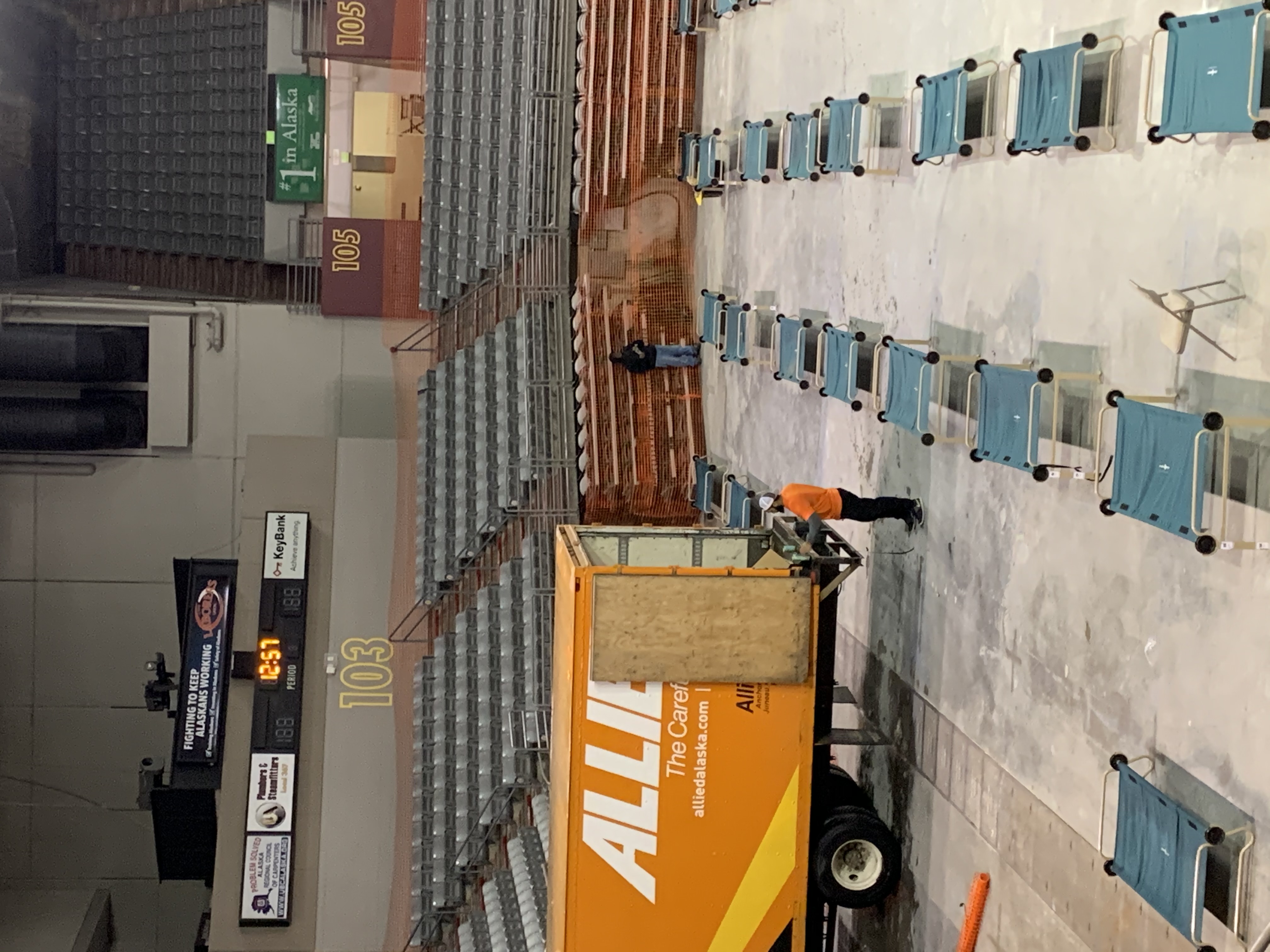
2020 - During the COVID-19 Pandemic, EOC is activated for more than 500 days in to respond, provide timely public information, and other scarce resources to help the community with unmet needs to prevent the spread of a novel coronavirus and recovery from impacts. EOC is fully functional in-person, remote, and hybrid operations. We supported over $120M worth of response and recovery activities, 98% of which were reimbursed by FEMA.
2022 - OEM facilities the update of both the Anchorage All-Hazard Mitigation Plan and Emergency Operations Plan.
2023 - Update to MOA Code 3.80.010 to reflect modern emergency management duties and responsibilities. Begin working with Emergency Management Accreditation Program (EMAP) to evaluate and improve according to national standards.
2024 - Complete baseline assessment for Emergency Management Accreditation Program (EMAP) to evaluate and improve according to national standards.
2025 - Become the first Emergency Management Program in Alaska to receive conditional approval for accreditation by the EMAP Program.
Name a few key staff or community members that have shaped your department and share one or more stories that reflect their impact. George Vakalis has been a strong advocate of the emergency management department for decades. He helped the EOC get a standalone facility and continues to advise local and state officials regularly on how to support emergency management to this day.
We believe that local government plays a critical role in improving our community and that it works best when residents are engaged. We provide research, communications, and project management on behalf of the Anchorage Assembly to engage our community in local government. Learn more.