What year was your department established?
1937 – The Territorial Department of Health established the Anchorage Public Health Department.
1954 – The Greater Anchorage Health District is created by the Alaska Board of Health with the stated purpose of protecting and improving public health within the district. The district’s boundaries mirror the Anchorage Independent School District boundaries.
1975 – City and Borough merge. The Department of Health and Environmental Protection is created under this new structure.
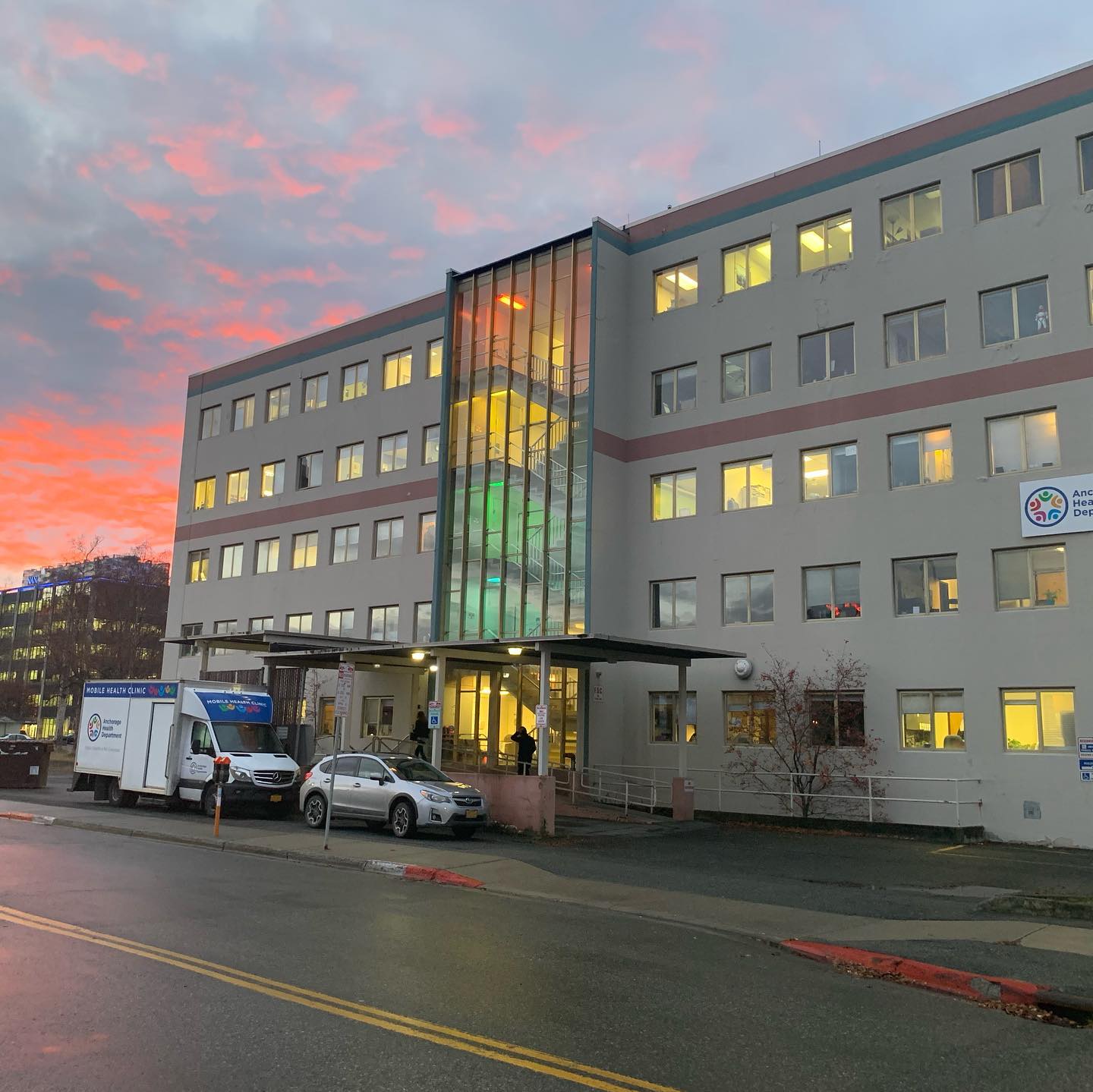
1976 – The Department of Health and Environmental Protection moves into 825 L St, which was formerly the Anchorage Community Hospital. The department has five divisions: Administrative, Physical Health, Behavioral Health, Environmental Protection, and Air Resources. The department works to protect the health of residents and prevent disease. The department also maintains a health center in the Eagle River-Chugiak area.
1982 – Animal Control is moved under the purview of the Department of Health and Environmental Protection from the Anchorage Police Department.
1984 – The Department of Health and Human Services is created after the merger of the Department of Social Services and the Department of Health and Environmental Protection. Jewel Jones is the first director of DHHS.
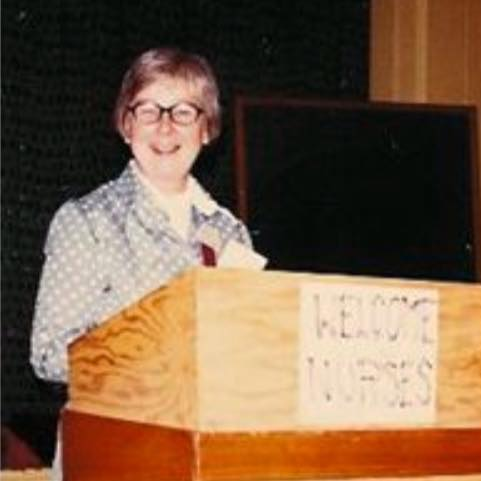
1990 – The building at 825 L Street is officially named the Arne Beltz Building. Arne Beltz was a public health nurse who worked throughout Alaska and served as the manager for the Division of Community Health Services from 1979-1985.
2019 – An Assembly ordinance changes the name of the department from DHHS to the Anchorage Health Department, to better align with the other city public safety departments (Anchorage Police Department, Anchorage Fire Department) and create more of a distinction between the city’s health department and the State of Alaska’s former Department of Health and Social Services.
What are some defining moments - the good, the bad, or the wild - that shaped your department?
The department played a significant role in the MOA’s response to the COVID-19 pandemic. This included contact tracing, testing, and vaccination clinics. AHD staff also served in the Emergency Operations Center fulfilling a variety of roles to ensure that the city was protecting public health, providing education to residents, and working with partner organizations in the city’s response.
Name a few key staff or community members that have shaped your department and share one or more stories that reflect their impact.
Arne Beltz was a public health nurse who worked all over Alaska, including Angoon, Kake, Shaktoolik, and Unalakleet in the 1950s. She began working in Anchorage in 1960 and served as the manager of the Division of Community Health Services of DHHS from 1979-1985. Arne’s vision led to programs such as WIC, the Home Health Agency, the Child Abuse Board, the Crisis Line, and the Family Planning Program being developed and having continued support. She was later inducted into the Alaska Women’s Commission Hall of Fame and the Alaska Nurses’ Hall of Fame.
One of the most recognizable features of the Anchorage Health Department building is the rainbow stairs on display every winter. Former AHD employee Christopher Salerno started wrapping the back staircase lights in colored cellophane in 1996, after his partner of over a decade died from AIDS. Salerno retired from AHD in 2017 and the department has continued to install the rainbow stairs every fall. The rainbow stairs are well-known and help create a positive, welcoming environment for clients and a bright sight in winter for everyone who passes by.
When the city and the borough merged, Jewel Jones became the first Director of Social Services. In 1984, the Department of Health and Environmental Protection and the Department of Social Services merged and became the Department of Health and Human Services. Jewel Jones was the newly formed department’s first director. Jewel Jones has a lasting legacy not only in the health department but in the Anchorage community. The health department’s main conference room is named in her honor.
Where can people learn more about your department?
AR 1990-149 is a cool piece of legislative history for AHD.
Tell us an interesting fact about your department's history.
We have people tell us that they were born in the current AHD building during the 60s and 70s when the building operated as a few different hospitals. Some AHD staff have family members who were born in this building.
Published by the Assembly Legislative Services Office
We believe that local government plays a critical role in improving our community and that it works best when residents are engaged. We provide research, communications, and project management on behalf of the Anchorage Assembly to engage our community in local government. Learn more.