What is the origin story of your community’s beginnings in Anchorage?
Congregation Beth Sholom came to be in Anchorage, Alaska on September 5, 1958 when 20 people gathered in Burt and Bobbie Goldberg’s home to welcome Shabbat and organize a synagogue (up until that point, chaplains on Elmendorf Air Force Base conducted the only Jewish services in the state). The organizers wanted to establish a center of Jewish identity for their children. “After quite a few heated discussions as to whether to affiliate with Reform or Conservative organizations,” said Bea Rose, first secretary for CBS, “the Congregation formally affiliated with the Reform Movement in May 1960, while it continued to meet in borrowed facilities.”
Where can people learn more about your community’s history?
Who in your community is considered to have the most knowledge about your community’s history in Anchorage?
We have a group of members who together have the knowledge of our community, many of whom were born in Anchorage and grew up in the synagogue. Among them, John Levy, son of Edward and Gertrude Levy, who arrived in Anchorage in 1956. Other individuals with knowledge about the community’s history include Brock Shamberg, who was Congregation Beth Sholom’s unofficial historian, and Marilyn Doore, whose parents John and Elaine Doore became active in the synagogue in the mid 1960s.
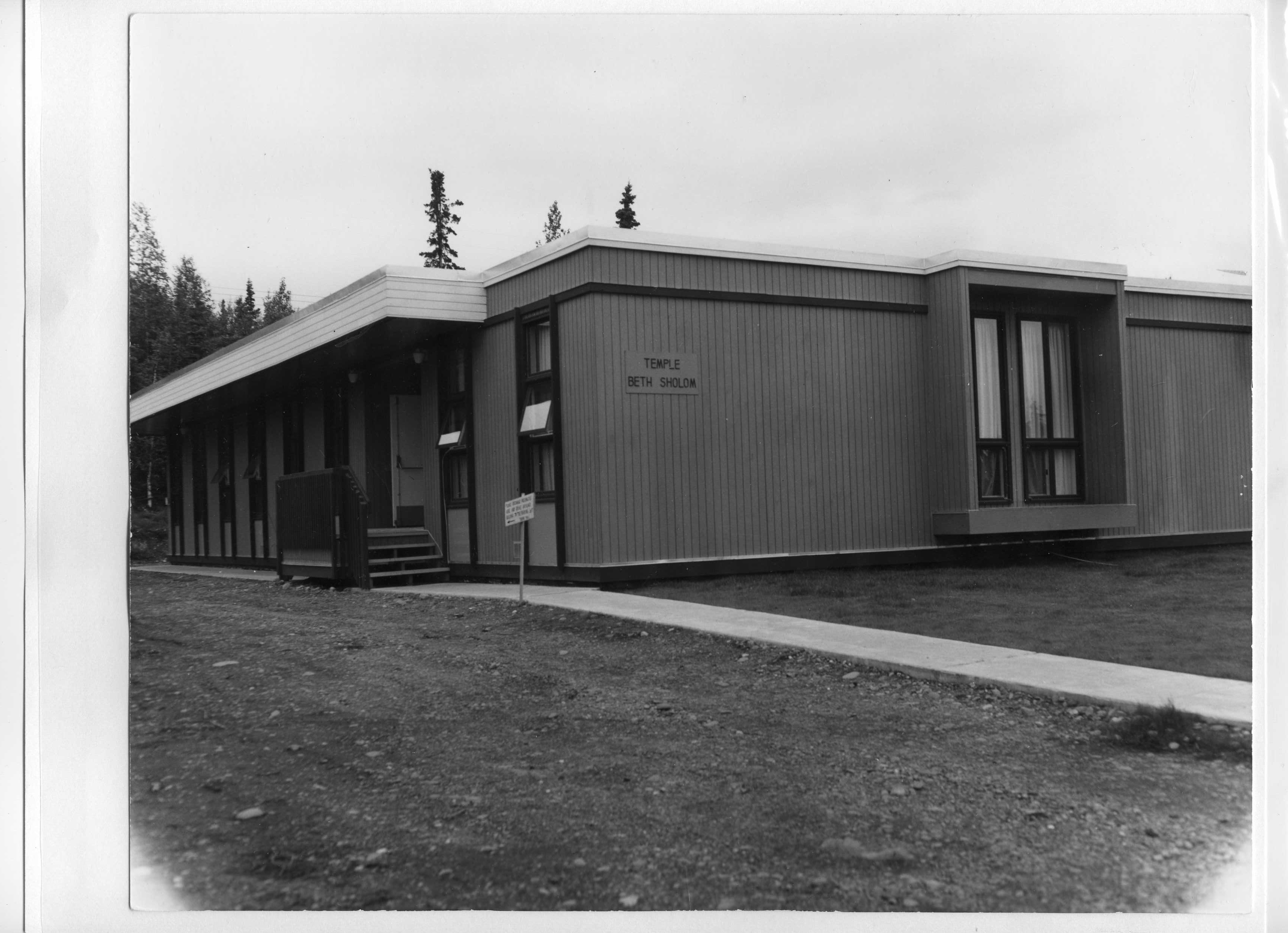
Photo: the synagogue on W 20th Avenue.
Tell us about three to five people - past or present - who made a mark on your community.
Congregation Beth Sholom owes much to three foundational leaders who ensured the continuity and vitality of Anchorage’s Jewish community.
- Irma (Finn) Brosseau proved instrumental during a time of crisis, writing a powerful article immediately following the devastating 1964 Good Friday earthquake, also known in our community as the Passover earthquake, that successfully gained national attention and generated the crucial funds necessary to construct the community’s first dedicated synagogue building.
- The physical and spiritual growth continued under Rabbi Harry Rosenfeld, the longest-serving rabbi, who guided Congregation Beth Sholom (CBS) through the transition from the former synagogue to the new one, personally organizing the symbolic march of the Torahs to the present site.
- Finally, the philanthropic legacy of Barney Gottstein secured the community's future; he not only donated the land for the current synagogue on E. Northern Lights, but also funded CBS’ first Program Director to deepen Jewish engagement and provided donations to ensure Alaska youth could participate in the March of the Living educational trips.
What are some defining moments - the good, the bad, and the wild - that shaped your community’s identity in Anchorage?
A memory shared by Rabbi Harry Rosenfeld, Rabbi Emeritus: After years of planning, in 1988, Congregation Beth Sholom moved from its home at 1000 W. 20th Street, which was built in 1964-5 to its current home at 7525 Northern Lights Blvd. It was our goal to be in our new home for Rosh Hashanah, 5749 (September 11-13, 1988.) Thankfully, construction went smoothly and we moved in on Labor Day weekend. It is customary, when Jews build a new synagogue, to remove the Mezuzot and the Torah scrolls from the old building to deconsecrate it. Then, the Mezuzot are hung on the new synagogue and the Torah’s placed in the Ark which consecrates it.
We hoped that the weather for Labor Day weekend would be pleasant, and we planned the “10K Torah Trot”, to walk the Torah scrolls the six miles from the old building to the new synagogue. The weather exceeded our hopes, and on Friday September 2, 1988, dozens of us set off from West 20th St. and walked up Northern Lights Blvd. We honored the son of one of our founding members, Arthur Goldberg by giving him a Torah scroll to hold as we left our old home. Upon arriving at our new home, Rabbi Harry Rosenfeld led us in song as we walked up the driveway. At the new front doors, he led us in the hanging of the Mezuzot with the traditional prayers. We then entered the synagogue and, for the first time, placed our sacred Torah scrolls in the Ark. After more singing, we prepared for our first Shabbat service in our new synagogue home.
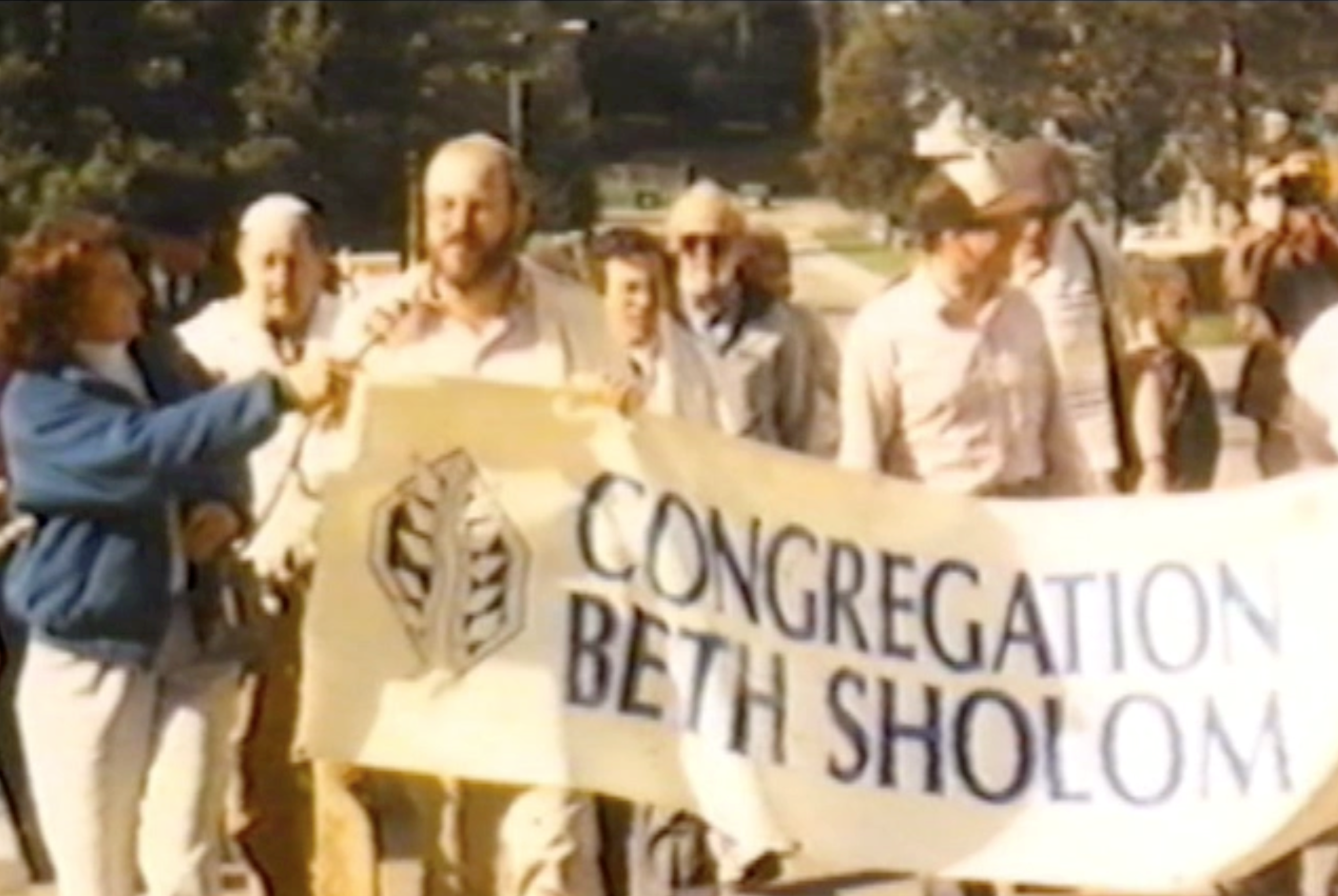
Photo: the Torah walk from the old to the new synagogue in 1988.
Photo: Foreign Minister of Israel, Golda Meir met with congregation members, about 1962.
Why is Anchorage important to your community? What makes you stay here even during the hard times?
The Anchorage Jewish community is small but deeply connected. What makes it important is the way we show up for one another — for holidays, life events, and in times of need. Some in our community have grown up in Anchorage, and it is our home. Other members of our community moved here, and made Anchorage their home. We celebrate together, we mourn together, and we support one another through the long winters and the challenges of living far from larger Jewish centers. Our Jewish community is enhanced by the diversity of our members and has strengthened the feeling of an extended family.
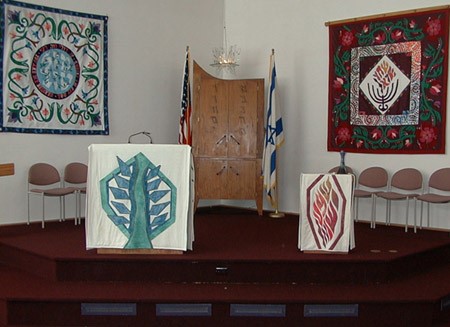
Photo: the interior of the synagogue looking at the bima, or pulpit. The ark was brought from the old synagogue on 20th Avenue.
What’s one interesting fact about your community’s history that you think people in Anchorage should know about?
Congregation Beth Sholom in Anchorage is the first and oldest Jewish congregation in Alaska. Our Congregation is named Beth Sholom or “House of Peace.” Here at CBS we try to honor our founders by instilling in ourselves, and those we come in contact with, a feeling of fulfillment and wholeness that will grow into a broader sense of peace for our community, our nation, and the world as a whole.
Published by the Assembly Legislative Services Office
We believe that local government plays a critical role in improving our community and that it works best when residents are engaged. We provide research, communications, and project management on behalf of the Anchorage Assembly to engage our community in local government. Learn more.